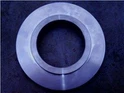
It is relatively easy for people who are in contact with stainless steel flanges to judge the authenticity of stainless steel flanges, but for those who do not have much contact with them, how to judge the authenticity of the stainless steel flanges they buy? The following Henggong introduces several methods for identification, as follows:
Nitric acid point test
A notable feature of stainless steel flanges is their inherent corrosion resistance to concentrated and dilute nitric acid. This property allows it to be easily distinguished from most other metals or alloys. However, high-carbon 420 and 440 steels are slightly corroded during the nitric acid point test, and non-ferrous metals will be corroded immediately when they encounter concentrated nitric acid. Dilute nitric acid is highly corrosive to carbon steel.
Magnetic test
The magnetic test is the easiest way to distinguish annealed austenitic stainless steel from ferritic stainless steel. Austenitic stainless steel is a non-magnetic steel, but it will be slightly magnetic after being cold-worked under large pressure; while pure chromium steel and low-alloy steel are strong magnetic steel.
Copper sulfate point test
The copper sulfate point test is the easiest way to quickly distinguish plain carbon steel from all types of stainless steel. The concentration of the copper sulfate solution used is 5-10%. Before the point test, the test area should thoroughly remove grease or various impurities, and polish a small area with a soft abrasive cloth, and then use a drop bottle to instill copper sulfate solution into the cleaned area. Ordinary carbon steel or iron will form a layer of surface metal copper in a few seconds, while the surface of stainless steel will not produce copper precipitation or show the color of copper.
Sulfuric acid test
The stainless steel flange test can distinguish 302 and 304 from 316 and 317. The cut edge of the sample should be finely ground, and then cleaned and passivated in nitric acid (specific gravity 1.42) with a volume concentration of 20-30% and a temperature of 60-66°C for half an hour. The volume concentration of the sulfuric acid test solution is 10%, and it is heated to 71°C. When 302 and 304 steels are immersed in this hot solution, they are rapidly corroded and produce a large number of bubbles, and the samples turn black within a few minutes; while 316 and 317 steels The sample is not subject to corrosion or reacts very slowly (no bubbles are produced), and the sample does not change color within 10 to 15 minutes. The test can be made more accurate if approximate comparisons are made by simultaneously testing samples of known composition.