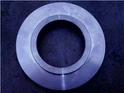
The stainless steel flange itself is a pipeline component with very good performance, and it is not easy to deform when it is fastened. When installing stainless steel flanges, the flanges should be smooth and clean, and attention should be paid to removing oil and rust. When installing stainless steel flanges, be sure to choose a suitable gasket. The gasket must have anti-aging and oil resistance and excellent mechanical strength. When installing stainless steel flange joints, it is necessary to choose gaskets of different sizes, so as to ensure correct installation.
When tightening stainless steel flanges, the amount of tightening when distributing gaskets is generally about one-third. In addition, in actual use, in order to ensure the quality and use value of stainless steel flanges. Please use stainless steel flanges according to the usual methods and principles, and use and install them according to the usual operating standards.
The quality and performance of stainless steel flanges are very good. Stainless steel flanges are not economical mechanical parts in the usual sense, but mechanical product carriers with rich technical connotations. Widely used in many equipment processing. Hydraulic oil stainless steel flanges are the most common components in pipeline engineering. Stainless steel flanges are used in pairs. However, the connection part that is connected to the outer peripheries of two flat surfaces at the same time by bolts is generally called a "flange" such as a connection of a ventilation pipe. Such parts may be referred to as "flange parts". This connection is for the device only. For example the connection between the flange and the pump. It is difficult to call a pump a "flange part". Compared with small valves (such as valves), they can be called 'flange parts'.