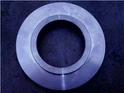
Our blind flanges and flat flanges generally need heat treatment, or whether they need heat treatment depends on the specific standard requirements. Are there different methods of heat treatment? Generally, the heat treatment of blind flange can only change the matrix structure, not the morphology and distribution of graphite. The change of mechanical properties is caused by the change of matrix structure. The graphite flakes of ordinary gray cast iron (including inoculated cast iron) have a great influence on the mechanical properties (strength and ductility), while the mechanical properties of gray cast iron after heat treatment are not significant. It should also be noted that the thermal conductivity of blind flange is worse than that of steel, and the existence of graphite leads to higher notch sensitivity than that of steel. Therefore, the cooling rate (especially quenching) of blind flange in heat treatment should be strictly controlled. However, in addition to blind flange, flange forgings, as shaft parts, such as crankshaft and connecting rod of diesel engine, require comprehensive mechanical properties with high strength and good toughness. Flange forgings are subject to quenching and tempering treatment. The process is: heat the flange forgings to a temperature of 860-900 ℃, keep the heat preservation to austenitize the matrix, and then cool in oil or molten salt to realize quenching. After high temperature tempering at 500-600 ℃, the tempered sorbite structure (generally with a small amount of pure massive ferrite) is obtained, and the original spherical graphite shape remains unchanged. After treatment, the strength and toughness match well, which is suitable for the working conditions of shaft parts such as flange forgings. This is the common heat treatment method of blind flange and the main heat treatment method of flange forgings.
Jul 11, 2022
What are the common heat treatment methods for blind flange
Send Inquiry