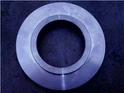
Various gaskets require the surface roughness Ra of the flange. The surface roughness of the flange is determined by the gasket. The surface finish of the flange in some special occasions is required to be relatively high. For example, the surface finish of the sanitary flange in the food industry needs to be about Ra1.6 or higher, but the surface roughness of the industrial pipeline flange is not so high. Generally, it is within Ra12.5.
The roughness grade of flange processing surface is as follows:
1、 Roughness below 0.8: polishing
2、 Roughness 0.8: surface machined by grinding machine
3、 Roughness 1.6-3.2: machined surface of lathe and milling machine
4、 Roughness 3.2-12.5: general routine processing
Theoretical weight calculation method for metal materials of flanges
1、 Theoretical weight calculation method for metal materials of flanges
Angle steel: weight per meter =0.00785* (side width + side width - side thickness) * side thickness
Round steel: weight per meter =0.00617* diameter * diameter (rebar and round steel are the same)
Flat steel: weight per meter =0.00785* thickness * side width
Pipe: weight per meter =0.02466* wall thickness * (outer diameter - wall thickness)
Stainless steel pipe for flange: (outer diameter - wall thickness) × wall thickness × 0.02491= kg / M
Plate: weight per meter =7.85* thickness
Brass pipe: weight per meter =0.02670* wall thickness * (outer diameter - wall thickness)
Copper pipe: weight per meter =0.02796* wall thickness * (outer diameter - wall thickness)
Aluminum checkered plate: weight per square meter =2.96* thickness
Non ferrous metal specific gravity: red copper plate 8.9 yellow copper plate 8.5 zinc plate 7.2 lead plate 11.37
The calculation formula of non-ferrous metal plate is: weight per square meter = specific gravity * thickness