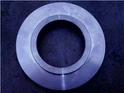
Principle of projection welding of flange
Flange projection welding is a high-efficiency welding method capable of multi-point welding at the same time, which can be used to replace arc welding, brazing and snapping. The processing speed of this method is fast, and there is no other consumption except electricity, which is a great feature.
Compared with spot welding, projection welding of flanges is different in that the bumps are processed on the plate in advance, or the shape and chamfer on the weldment that can concentrate the current are used as the mutual contact parts during welding.
When the flange is welded, it is contacted by bumps, which increases the pressure and current density per unit area, which is beneficial to crush the oxide film on the surface of the plate, concentrates the heat, reduces the shunt, and reduces the spot welding center distance. Multi-point projection welding improves productivity and reduces joint warpage.
On the body, the projection welding nuts (nuts with bumps) are generally welded to the thin plate, so that only the bolts need to be tightened during assembly, which improves the assembly efficiency.
Projection welding is to pre-process one or more bumps on the mating surface of a Chongqing flange, make it contact with the surface of another flange, heat it with electricity, and then collapse it, so that these contact points form the resistance of solder joints. Welding method.