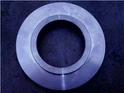
Weleld defects are prone to stainless steel flange
The defect of stainless steel flange is serious, if the manual mechanical grinding method to make up, then the grinding traces, the surface is uneven, will affect the appearance; grinding polishing passivation is uneven: stainless steel flange manual grinding and polishing after pickling passivation treatment, for large workpiece, it is difficult to achieve uniform treatment effect, not the ideal uniform surface. The disadvantages of stainless steel flange are working costs, auxiliary materials are high; scratches are difficult to remove: overall pickling passivation, stainless steel flange can occur chemical corrosion or electrochemical corrosion and rust, also can not remove the scratches, welding splash and attached to the surface of stainless steel flange. So how to solve the problem of stainless steel flange processing? Select drop, enter the next process, different stainless steel flanges enter the corresponding process according to processing requirements; bending should first according to the size on the drawings. But its advantages are also more prominent, the stainless steel flange material is stainless steel, because the stainless steel has a good corrosion resistance, so it can make the structural components to maintain the integrity of the engineering design. Fanges do not produce corrosion, pitting, rust, or wear. Chromium-containing flanges also combine mechanical strength and high elongation, easy to process and manufacture parts, and easy to meet the needs of architects and structural designers. All metals react with atmospheric oxygen to form an oxide membrane on the surface. If holes are formed, paint or oxidation-resistant metal can be plated to secure a carbon steel surface, but, as it is known, this protection is only a thin film.Stainless steel flange is not easy to deformation, flange manufacturers have corresponding rigidity and elasticity requirements and transition of reasonable thinning for welding, welding joint surface interval, adopt more complex structure, suitable for pressure or temperature or high temperature or low temperature pipe, generally used for PN greater than 2.5MPa pipeline and valve connection; also used for transporting expensive, flammable and explosive medium pipeline