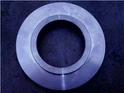
Seal problems and characteristics of the SO Flanges
SO Flanges sealing principle: the two sealing surfaces of the bolt squeeze the flange gasket to form a seal, but this can also cause seal damage. To keep the seal, you have to maintain a huge bolt force, and to do that, you have to make the bolts bigger. Larger bolts match the larger nuts, meaning that a larger bolt diameter is required to create the conditions for fastening the nuts. However, the larger the diameter of the bolt, the flange bends, and the only way is to increase the wall thickness of the flange part. The entire device will require great size and weight, which is a special problem in the offshore environment, where weight is always a major concern. And, fundamentally, the SO Flanges is an ineffective seal that requires 50% of the bolt load used to squeeze the gasket and only 50% of the load left to maintain the pressure. SO Flanges is often used in cases where the medium temperature and pressure are not high but the medium is more corrosive. When the medium is more corrosive. The rare integral flange has SO Flanges and WN Flanges.SO Flanges features not only to save space, reduce the weight, but more importantly, to ensure that the joint part does not leak, with good sealing performance. Second, the flange gaskets have been replaced by a sealing ring to ensure the matching of the sealing surface. This way, only little pressure is needed to press the tight cover. Therefore, the flat welding flange type is a relatively high-quality flange product, which reduces the quality and space, and plays an important role in the industrial use. However, the main design drawback of flat welding flanges is that it does not guarantee no leakage.