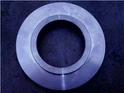
Production of a non-standard flange
In the production of flange products, workers all know that different types of flange products, different flange materials should follow the standards of various countries, there are American standard flange, German standard flange, Japanese standard flange, English standard flange and national standard flange.However, there are some products that do not follow any standards, customers provide the flange drawings that they need, but we produce the flange according to the requirements on the drawings, these flanges we make it a non-standard flange.We usually encounter some situations that cannot meet the requirements of these standards, such as: in the pressure changing process of the fertilizer plant, there is a medium temperature converter furnace, its operating condition is : The pressure is 3.2mpa and the temperature is about 500c, while the user still wants to seal the surface size with the flange at room temperature, which requires the design of this non-standard flange.
In non-standard flange production, we adopted two schemes: one is to increase the thickness of flange ring, the second is to increase the thickness of flange cone strength, flange is by flange ring, cone strength and cylinder bearing together, the three bearing ratio associated with their rotational stiffness, stiffness increases the increase of its bearing ratio, namely stiffness, bearing ratio is large.
Increase the thickness of the flange ring, increase the rotational stiffness of the flange ring, the bearing ratio, reduce the cone strength and the cylinder part of the bearing ratio, the ring stress of the flange ring can generally decrease, but when the stiffness of the flange ring and the cone stiffness, the ring stress may increase.
Increase the strength of the flange and increase the rotational stiffness of the cone strength, increase the bearing ratio of the cone force and the boundary force of the flange ring increases, so the radial stress of the flange ring increases, the ring stress decreases, and the bending moment of the cone strength decreases.