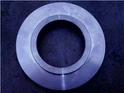
Large flanges generally need one more process, namely passivation process. Generally, it can be divided into wet flange passivation and dry flange passivation. It can also be specifically refined into a variety of passivation types of large flanges. However, the passivation characteristics of large flanges depend on the process and the raw materials used for large flanges, the elements contained in the raw materials of large flanges, the metallographic analysis of stainless steel large flanges, and the degree of processing. Among the constituent elements of large flange raw materials, some contain chromium and nickel. This element itself has strong passivation, and the passivation of iron is slightly worse. Therefore, the higher the proportion of chromium and nickel in the raw materials of large flange, the stronger the passivation of large flange. The large flange made of austenitic and ferritic stainless steel has uniform structure and good passivation. The large flange made of martensitic stainless steel is strengthened after heat treatment, and its metallographic structure is multiphase structure. The passivation of this large flange is not strong. The large flange can connect the large shaft and connect the head and tail of the pipe into large parts. Or large equipment is used. For example, the most common mixer raceway is made of large flange. French large flanges can be used alone or in pairs. When large flanges are used in pairs, the two large flanges shall be sealed. Generally, batteries or gaskets are used. Large flanges are divided into large threaded connecting flanges, large welded flanges and large socket flanges. This is because of the classification caused by their different connection modes.
Apr 13, 2022
Passivation Process Of Large Flange
Send Inquiry