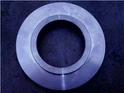
Mechanical properties of carbon steel flange and its application in production
Mechanical properties of carbon steel flange and its application in production release time: The steel plate shall be subjected to ultrasonic flaw detection, no layered defects shall be cut into strips along the direction of steel rolling, bent counterwelded into a ring, and make the steel surface form the cylinder of the ring. Non-carbon steel flange is that the mechanical properties depend on the carbon content of the steel, and the steel generally does not add a large number of alloy elements, sometimes known as the general carbon steel or carbon steel. Carbon steel, also known as carbon steel, refers to a ferrocarbon alloy with a carbon content of less than 2%. Steel plates shall be subjected by ultrasonic inspection without layered defects; strips shall be cut in the direction of steel rolling, bent and welded into rings, and cylindrical surface of steel. Steel plate shall not be processed directly into neck flanges; the butt weld of the ring shall be fully fused; and carbon steel bolts shall not necessarily be used with insulating gaskets and barrels, plus insulating gaskets and barrels are only used for live or the fluid in the pipe is flammable and explosive, so stainless steel bolts shall be used with insulating gaskets and barrels. Carbon steel flange itself is compact in structure, simple in structure, maintenance is also very convenient, the sealing surface and spherical surface is often in a closed state, not easy to be eroded by the medium。The welded carbon steel flange is also known as the welding neck flange, which is different from other flanges in that there is a long and inclined high neck from the flange and pipe welding to the flange disc, and the wall thickness of this section gradually changes from the height direction to the pipe wall thickness, improving the discontinuity of stress, thus increasing the flange strength. Flat welding carbon steel flange is also known as the lap welding flange.