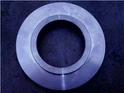
Main characteristics of the formation of forgings and the defects of forgings
Forgings products can be seen everywhere in life, many people do not know what it is called, but it plays an indispensable role in life. Many things in our daily life need to be completed by the forgings factory, but the formation of the forgings is also crucial! I think you are very interested in how forgings are formed, now I let me introduce to you how forgings are formed! The formation of the forging is every process is very strict, the forging is formed through the metal is applied by the pressure, in the process of strong pressure needs to change its physical characteristics, for the pressure of the casting is also very important! This force is formed by a hammer or a strong pressure. The demand for forgings is also very sophisticated, with each piece consistent without porous, inclusions or other flaws. The advantages of the forging are extensible length; extensible length, extensible cross section; modifiable length, modifiable cross section. The main features of the forging defects are capillary cracks (crack): capillary cracks located on the surface of the steel, about 0.5-1.5mm deep. Scar: a layer of easily peeling thin film exists locally on the surface of the steel, and its thickness can reach about 1.5mm. Forging can not be welded together, in a scar form on the surface of the forging. Joints (folding): Joints in opposite directions at both ends of the diameter surface of the rolling end. The seam with the arc tangent into an Angle, the seam has oxidation inclusion, surrounded by decarbonization. Non-metallic inclusions: An elongated or broken but intermittently spread along the longitudinal longitudinal section. The former such as sulfide, the latter such as oxide, brittle silicate. Composition segregation zone: strip or strip defects occur along the streamline direction of some alloy structural steel, such as 40GrNiMoA, 38GrMoAlA, etc. The microhardness of the defect region is significantly different from the normal zone.