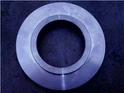
1. Protective paint treatment shall be applied to the Lapped Joint Flanges, which is divided into yellow and black paint.
This method is to hang the paint directly on the dural Lapped Joint Flanges. There are many corners and edges on the Lapped Joint Flanges. Due to the thinning of the edge, although the thicker coating can deal with the Lapped Joint Flanges, the traditional Lapped Joint Flanges coating system is difficult to effectively cover the edge. The problem is that the Lapped Joint Flanges treated by this paint method can seal the fasteners and cannot be disassembled, so it is impossible to protect the Lapped Joint Flanges.
2. Mechanical treatment Lapped Joint Flanges
The sealing between Lapped Joint Flanges and Lapped Joint Flanges is mainly realized by protective cover and fixture. The Lapped Joint Flanges are usually made of stainless steel or plastic sealing rings with rubber sealing strips to achieve the purpose of spacing. The sealing protection method is not good enough for the Lapped Joint Flanges. The Lapped Joint Flanges thus protected also have to rely on covers or fixed equipment that must match the Lapped Joint Flanges stored in various specifications.
3. Hot melt adhesive treatment of Lapped Joint Flanges
The hot-melt adhesive for hot-melt adhesive treatment of Lapped Joint Flanges is actually a waxy fusible polymer. This hot-melt adhesive is heated at high temperature by complex hot-melt equipment and sprayed on the Lapped Joint Flanges to cover the whole Lapped Joint Flanges. The advantage of hot melt adhesive treatment of Lapped Joint Flanges is that it can be reused, so as to save the cost of anti-corrosion treatment of Lapped Joint Flanges. Although the hot melt adhesive treatment Lapped Joint Flanges can be reused, the hot melt adhesive treatment must be carried out under high temperature conditions