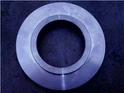
Forging products also require heat treatment
Forging products also need heat treatment, and the heat treatment process is very important. In the heat treatment of forgings, heat treatment stress is an important consideration in the process of formulating the process, and some stresses are generated during heating and cooling, and disappear with the end of these processes, which is instantaneous stress; Some of the stresses are the equilibrium stresses that remain inside the forging after the end of the heat treatment, which is the residual stress. In the process of heat treatment, if the instantaneous stress generated reaches the yield point of the material at this temperature, the forging will produce plastic deformation and relax the stress. If the instantaneous stress is greater than the breaking strength of the material, it is possible to cause cracks in the forging until it breaks. Even if the instantaneous stress is less than the strength limit of the material, because there are always some metallurgical defects inside the large forging, a large stress concentration is caused at these defects, so that the original defects are further expanded, and even manufactured. Breakage of forgings. Therefore, controlling the magnitude of the instantaneous stress is an important issue in the formulation of the heat treatment process for large forgings. The effect of heat treatment residual stress on the workpiece has a duality, there are good effects and bad effects, if the residual stress is the same as the working stress symbol of the part, the strength of the part can be reduced, if the opposite, the strength of the part will be improved. For some important large forgings, the allowable participation stress should be less than 10% of the material yield point.Shanxi Haokun Flange Group Co., Ltd. In order to ensure the quality of forgings and improve the performance and service life of the product, in addition to checking the quality of forgings at any time in the production process, forgings must also undergo quality inspection by full-time personnel before warehousing.