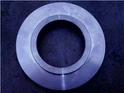
Carbon Steel Flanges Technical requirements and use of welding flanges
The grade and technical requirements of Carbon Steel Flanges welding flange shall comply with the corresponding requirements of JB4726-4728.1. Carbon steel forgings and austenitic stainless steel with nominal pressure PN 0.25MP-1.0MPa allow class I forgings.2. Except as specified below, the forgings with a nominal pressure PN of 1.6MPa-6.3MPa shall meet the requirements of the forging grade of grade grade or above. The Carbon Steel Flanges butt welding flange is generally made of forging or forging process. When using steel plate or type steel manufacturing, must meet the following requirements: 1, the welding flange should be ultrasonic detection, without layered defects; 2, should be cut along the direction of steel rolling strip, through bending pair welding into a ring, and make the surface of the steel into a ring cylinder. Steel plate shall not be directly machining into neck butt flange; the lateral neck slope of Carbon Steel Flanges butt flange shall not be greater than 7o. Technical parameters are strictly controlled during production and welding to ensure that they can play a full role and value in production and use. Carbon Steel Flanges use of welding flange has corresponding rigidity and elasticity requirements and reasonable welding joint surface distance, free from welding temperature deformation, it adopts a relatively complex shape structure, suitable for pressure or temperature fluctuation or high temperature, high pressure and low temperature pipeline, generally used for PN greater than 2.5MPa pipe and valve connection; is also used for conveying expensive, flammable and explosive medium pipeline.2. The Carbon Steel Flanges butt welding flange is a kind of pipe fittings, which refers to the flange with a neck and a round pipe in transition and connected with the pipe butt welding. The welding flange is not easy to deform, good sealing, widely used, has the corresponding rigidity and elasticity requirements and reasonable opposite welding thinning transition, the distance from the joint surface is large, the joint surface is free from welding temperature deformation.