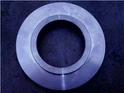
1. Physical and chemical analysis
Firstly, the chemical composition of the cracked flange was analyzed, and the analysis results showed that the chemical composition of the flange and welding materials met the requirements of relevant standards. The outer surface and sealing surface of the flange neck were tested for Brinell hardness. The hardness test value meets the requirements of the JB4728-2000 standard. Under the premise that the chemical composition of the material is qualified, the hardness test is qualified, the pipeline installation meets the technical requirements, and the pressure test operation specifications, cracks appear in the pipeline flange during the pressure test, indicating that the defect is related to the law. Lan internal organizational structure or other unknown factors.
2. Analysis of crack properties
The leaking flange was cut off from the pipeline, and a comprehensive macroscopic inspection was carried out. It was found that there were cracks on the inner surface of the flange, the longest length was 3 mm, and the width was 0.5 mm. More cracks were also found on the inner surface of the bolt hole of the flange, and many non-metallic inclusions were found on the sealing surface of the flange and other places. Some non-metallic inclusions formed small cracks on the sealing surface of the flange due to falling off. There are pits, the largest pit is 2.0 mm, the smallest pit is 0.8 mm, and there are tiny cracks visible to the naked eye on the edge of the pit. On-site macro inspection of other austenitic stainless steel flanges from the same manufacturer and batch shows that many methods Flanges have different degrees of defects, and some flanges have obvious cracks visible to the naked eye. The inspection results further show that flange leakage is related to the material factors of the flange itself.
3. Metallographic structure analysis
In order to further explore the cause of the cracks and find out whether the new flange has been repaired before being assembled and welded to the pipeline, a metallographic inspection was carried out on the crack position of the flange section.
4. Analysis of the causes of cracks
Due to the presence of a large number of non-metallic inclusions in the forging blank used to make the flange during the forging process, the volume inclusions are repeatedly forged into regional inclusions, resulting in forging cracks along the tips of the inclusions in the material. After forging, the larger inclusions become cracks with larger size. Most of these cracks are buried cracks. After the forging blank is processed, some buried cracks become surface cracks. There are many microcracks on the inner and outer surfaces of the bolt holes. The existence of a large number of non-metallic inclusions will reduce the plasticity and toughness of the material. The slag inclusions in the cracks will cause stress concentration at the crack tip. , During the pressure test, the flange will crack and leak when the test pressure just reaches 0.6 MPa.