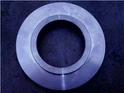
The SLIP ON FLANGES production workshop should adjust the opening according to the size of the opposite sides of the hexagon head of the screw or the hexagon of the nut, and the gap should not be too large, otherwise the screw head or the nut will be damaged, and it is easy to slip off, causing injury accidents; The fixed jaw shall be subject to the main force, and the wrench handle shall be tightened toward the operator instead of being pushed forward. The wrench handle shall not be extended arbitrarily, and the wrench in the SLIP ON FLANGES production workshop shall not be used as a hammer tool.
The overall heat treatment of carbon steel SLIP ON FLANGES has four basic processes: annealing, normalizing, quenching and tempering. When tempering carbon steel SLIP ON FLANGES, the tempering process shall be strictly followed. Support ribs shall be added at the parts with dense ribs or easily deformed plates to prevent deformation and fracture caused by tempering temperature. There should be a special person to take care of the tempering furnace thermometer and control the temperature in time to prevent the temperature from being too high or too low, which will have a great impact on the tempered workpiece. As a large-scale casting, carbon steel SLIP ON FLANGES products need to undergo aging treatment to improve its service performance and the internal quality of bed castings. Metal heat treatment is an important process link in mechanical manufacturing. Compared with other processing processes, heat treatment generally does not change the shape and overall chemical composition of the workpiece, but imparts service performance to the workpiece by changing the microstructure inside the workpiece or the chemical composition of the surface of carbon steel flange and stainless steel SLIP ON FLANGES. SLIP ON FLANGES is characterized by the inherent quality of carbon steel SLIP ON FLANGES and stainless steel