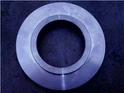
Other classifications of forged flanges
Ring grinding of forged flange: refers to the production of forged flanges with different diameters by ring grinding machine, which is a special equipment for forged flanges. It is also used to produce wheel shaped parts such as automobile hubs and train wheels. Special forging of forged flanges: including roll forging, cross wedge rolling, radial forging, liquid die forging and other forging methods, which are more suitable for the production of forged flanges with some special shapes. For example, roll forging can be used as an effective pre forming process to greatly reduce the subsequent forming pressure; Cross wedge rolling can produce steel balls, transmission shafts and other parts; Radial forging can produce large barrel, step shaft and other forgings related to forged flanges. According to the forging temperature, forging technology can be divided into hot forging, warm forging and cold forging. The initial recrystallization temperature of forged flange raw material steel is about 727 ℃, but 800 ℃ is generally used as the dividing line, and the forged flange hot forging is higher than 800 ℃; It is called warm forging or semi hot forging of forged flange when it is between 300 ℃ and 800 ℃, and it is called cold forging when it is forged at room temperature. Forged flange forgings used in most industries are hot forgings. Warm and cold forgings are mainly used for the forging of automotive, general machinery and other parts. Warm and cold forgings can effectively save materials. In addition, forging flange forging can be divided into rotary forging, rotary forging, roll forging, cross wedge rolling, ring rolling and cross rolling according to the movement mode of forging die.