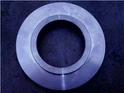
The bright line of carbon steel flange is mainly caused by alloy segregation. Slight bright lines have little effect on the mechanical properties of carbon steel flanges, while serious bright lines will significantly reduce the plasticity and toughness of materials.
Nonmetallic inclusions in carbon steel flanges
The non-metallic inclusions in carbon steel flanges are mainly formed by the chemical reaction between the components of carbon steel flanges or between the metal and furnace gas and containers during the cooling process of molten steel melted or cast. In addition, during metal smelting and casting, inclusions can also be formed because the refractory of carbon steel flange falls into the molten steel, which is collectively referred to as slag inclusion. On the cross section of carbon steel flange, the non-metallic inclusions of carbon steel flange can be distributed in point, sheet, chain or block shape. Serious inclusions in carbon steel flanges are easy to cause cracking of forgings or reduce the service performance of materials.
Carbide segregation of carbon steel flanges
Carbide segregation often occurs in alloy steels with high carbon content. It is characterized by more carbide accumulation in local areas. It is mainly caused by the fact that the ledeburite eutectic carbides and secondary network carbides in the steel of carbon steel flanges are not broken and evenly distributed during blank opening and rolling of carbon steel flanges. Carbide segregation will reduce the forging deformation performance of steel and easily cause cracking of carbon steel flanges. Carbon steel flanges are prone to local overheating, overburning and quenching cracking during heat treatment and quenching.