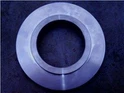
Cracks in forged flanges
Forging cracks of forged flanges are usually caused by large tensile stress, shear stress or additional tensile stress during forging. The position where the crack occurs is usually at the position with the maximum stress and the thinnest thickness of the blank. If there are microcracks on the surface and inside of the billet, or there are structural defects in the billet, or the plasticity of the material is reduced due to improper hot working temperature, or the deformation speed is too fast and the deformation degree is too large, exceeding the allowable plastic pointer of the material, cracks may occur in the processes of roughening, lengthening, punching, reaming, bending and extrusion.
Copper embrittlement of forged flanges
The copper embrittlement of the forged flange is cracked on the forging surface. When the forged flange is observed at high magnification, there is light yellow copper (or copper solid solution) distributed along the grain boundary.
Cracking of forged flange
The forging crack of the forged flange is a shallow turtle shaped crack on the surface of the forged flange. In the forming of forged flange, the surface subject to tensile stress (for example, the protruding part that is not full or the part subject to bending) is most likely to produce the defects of this forged flange.
The internal causes of cracking of forged flanges may be multifaceted:
(1) There are too many fusible elements such as Cu and Sn in the materials of forged flanges;
(2) When heated at high temperature for a long time, the steel surface has copper precipitation, coarse surface grains, decarburization, or the surface of forged flange after repeated heating;
(3) The sulfur content of the fuel is too high, and sulfur seeps into the steel surface of the forged flange.