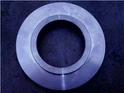
Cold rolling dies for stainless steel flanges include cold stamping dies, wire drawing dies, drawing dies, stamping dies, wire rolling dies, wire rolling plates, cold heading dies and cold extrusion dies. The steel for cold working die made of stainless steel flange shall have high hardness, strength, wear resistance, sufficient toughness, high hardenability, hardenability and other process properties of stainless steel flange material according to the working conditions of its manufacturing tools. Alloy tool steels made of stainless steel flanges for such purposes generally belong to high-carbon alloy steels, with a carbon mass fraction of more than 0.80%. Chromium is an important alloy element of this kind of steel, and its mass fraction is usually no more than 5%. However, for some die steels with high wear resistance and little deformation after quenching, the maximum chromium content can reach 13%, and in order to form a large number of carbides, the carbon content in the steel is also very high, up to 2.0% - 2.3%. The carbon content of cold working die steel made of stainless steel flange is high, and most of its structure belongs to hypereutectoid steel or ledeburite steel. The commonly used steels for stainless steel flanges are high carbon low alloy steel, high carbon high chromium steel, chromium molybdenum steel, medium carbon chromium tungsten plutonium steel, etc.
Hot rolling dies for stainless steel flanges are divided into hammer forging, die forging, extrusion and die casting, including hot forging dies for stainless steel flanges, press forging dies, stamping dies, hot extrusion dies and metal die casting dies. In addition to bearing huge mechanical stress, the hot deformation die made of stainless steel flange material also bears the effect of repeated heating and cooling, which causes great thermal stress.