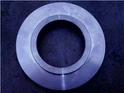
The neck height of the flange with neck is low, so the stiffness and bearing capacity of the flange can be improved. Compared with butt welding flange, the welding workload is large, the welding rod consumption is high, and it can not withstand high temperature and high pressure, repeated bending and temperature shaking. However, the on-site device is convenient, and the process of weld rubbing can be omitted, which is more popular. Flange plate with neck butt welding: neck flange welding is usually called "high hub" flange.
The aim is to transfer pressure to the pipeline, thereby reducing the high stress concentration in Frankie. Neck flange welding is a good design for butt welding those flanges that provide structural value due to their own existence. However, the price is relatively high because the consumption process of the product is complex. Threaded (threaded) flange: the threaded flange is connected with threads. However, the center of the product has the thread size corresponding to the pipe. Its main advantage is that it can be assembled without welding.
Sliding flange plate: the sliding flange has a lower hub, as the pipeline enters the single flange before welding. It is welded internally and externally to provide sufficient strength to avoid leakage. Sliding flanges are bored with slightly larger od pipe matching. They are superior to neck flange welding due to lower initial cost. Many users, but the cost of later devices will not be low. Due to the small number of welding neck flanges added, the lap flange: in practice, the lap flange is a complete and identical sliding flange, unless it has a radius between the hole and the flange race. It is necessary to have the radius of the flange containing the lap stub end. Usually, lap flanges and lap stubs mate together at the end of the month to assemble the system.